Grey Heron vs Little Egret: A Side-by-Side Comparison for UK Birdwatchers

Two long-legged wetland birds, one grey and one white. Surely nobody confuses those? Plenty of us do — usually at distance, in flat light, or when a Little Egret stands against a pale, sunlit estuary. Both belong to the heron family, both stalk shallow water for fish, and both fly with the neck folded back. The differences between them, though, are consistent and quick to learn. Here is what to look at, in the order that saves the most time in the field.
Size, shape and flight
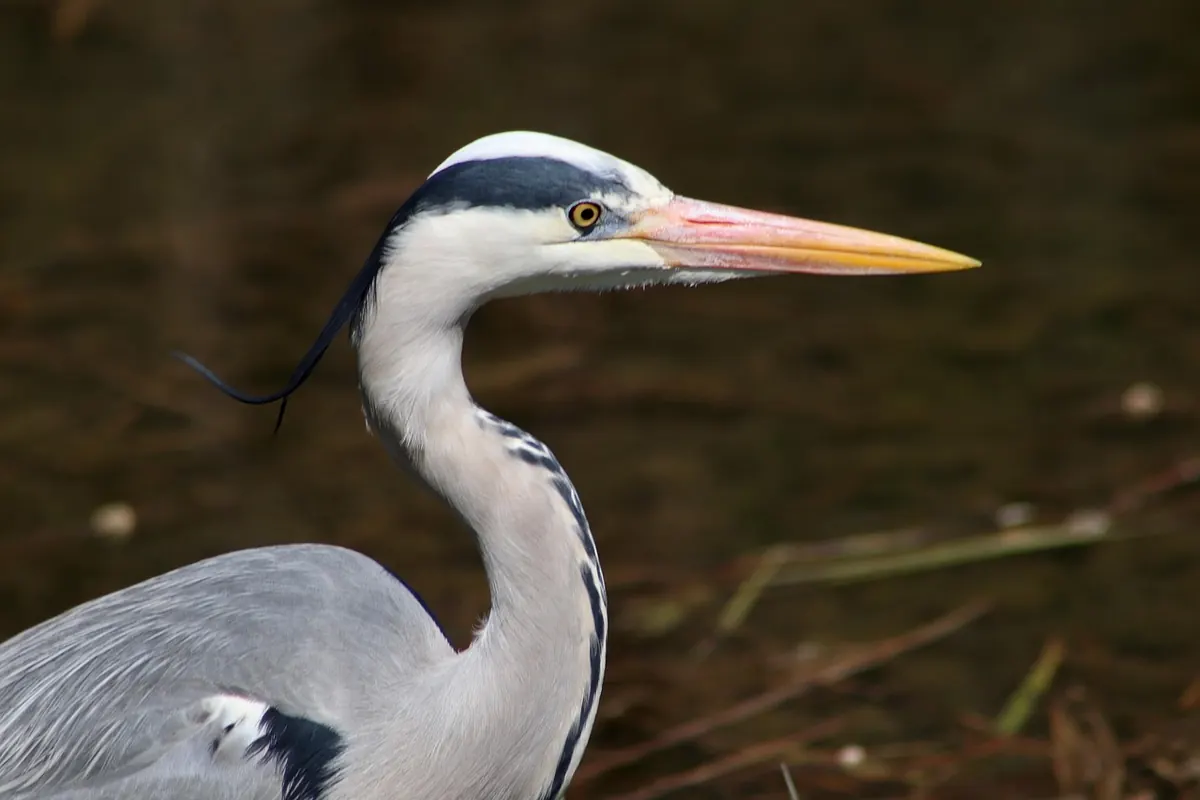
Grey Herons are genuinely large birds. A standing adult is roughly a metre tall, with a wingspan approaching two metres, and it carries that bulk in heavy shoulders and a thick, coiled neck. Hunched and motionless at the edge of a pond, it looks like something assembled out of spare parts: a long yellow dagger of a bill, a white crown, a black stripe running back from the eye.
Little Egrets are much smaller — around two-thirds the height of a Grey Heron, with a wingspan closer to a metre. The build is slimmer, more upright and rather more elegant, with a neck that looks kinked rather than hunched. For scale, picture a Mallard: a Little Egret is roughly Mallard-length but noticeably taller, while a Grey Heron dwarfs the duck entirely. Use whatever common bird is nearby as a ruler, because water plays havoc with your sense of distance.
In flight the two are still separable. Grey Herons row along on broad, bowed wings with slow, deliberate beats, the legs trailing well beyond the tail. Little Egrets flap faster and shallower, and appear bright white and compact — a small, busy bird rather than a heavy one.
Plumage: grey with black, or white with black
Grey Heron
Adults are soft blue-grey across the back and wings, with a paler grey neck streaked in black down the front. The head is white with a broad black eye-stripe that runs to the nape and continues into a pair of thin black plumes in the breeding season. Young birds look scruffier: no long plumes, a greyer crown and brownish-grey tones mixed into the wings.
Little Egret
Adults are white all over, but never plain. From late winter into spring they grow long, loose plumes on the nape, lower neck and back, giving them a shaggy, almost windblown outline. The bill and legs are black, and the feet are bright yellow — a combination that no other small white heron in Britain shows.
Lighting causes most of the trouble here. A Grey Heron on bright water can look almost white, and a Little Egret in shade or backlight can read as grey. When a bird looks ambiguous, stop looking at its overall tone and start looking at its bare parts.
Bill, legs and feet: the details that settle it
This is where the identification is usually won. The bill of an adult Grey Heron is stout and yellow, and its legs are a dull yellowish-brown to grey-brown. The bill of a Little Egret is thinner, a little shorter in proportion, and black. Its legs are black and very fine, with those famous yellow feet, often visible as it works through shallow water.
Two cautions. First, a Grey Heron's bill can look dark against a bright background, and the yellow legs are less obvious in winter. Second, juvenile Little Egrets show duller, greener-yellow legs and feet, so don't expect the full golden-slipper effect on every bird you meet. The overall impression still holds: pale legs mean heron, black legs mean egret.
Habitat: where each bird turns up
Grey Herons are hard to avoid if there is water nearby. Rivers, canals, lakes, gravel pits, ditches, reservoirs, estuaries, mudflats and coastal marshes are all fair game. They are flexible feeders and will also visit garden ponds, especially if there are fish to be had. Little Egrets are more specialised, favouring shallow coastal lagoons, saltmarshes, tidal creeks and the muddy edges of estuaries. In recent decades they have expanded inland along lowland rivers and wetlands, and are now a familiar sight in many parts of southern and eastern England, with scattered records elsewhere in the UK.
Behaviour: how they move and feed
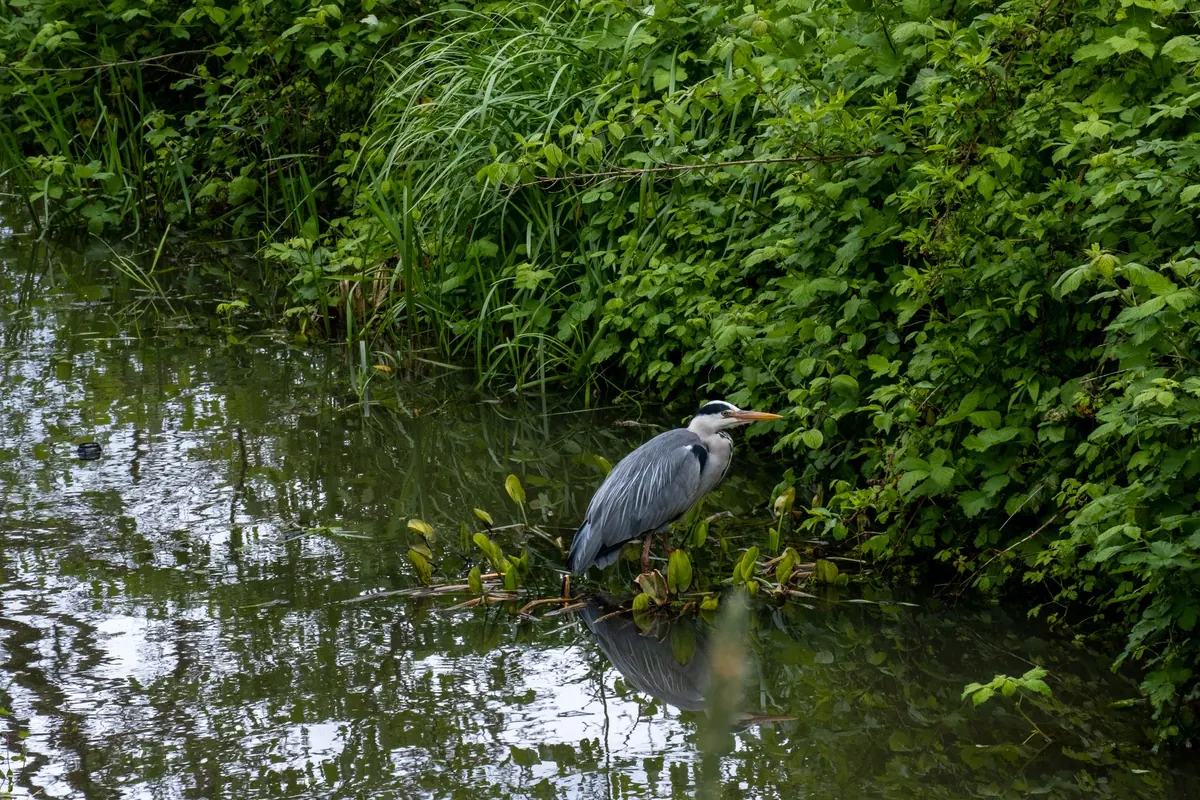
Watching a bird's behaviour can clinch the identification before you even see its legs. Grey Herons are masters of stillness. They typically stand motionless at the water's edge, neck coiled, waiting for a fish to stray within striking distance. The strike itself is explosive and fast, but the long periods in between are almost statue-like. They often feed alone, defending a favourite stretch of bank.
Little Egrets are far more active. They stalk through shallow water with quick, dainty steps, frequently changing direction. A favourite trick is to shuffle their bright yellow feet to disturb small fish and invertebrates, then stab at them. They may also run after prey or flick their wings to create shade, which helps them see into the water. Where food is abundant, several Little Egrets may feed loosely together, while Grey Herons tend to keep their distance from one another.
Confusion species: other white herons in the UK
If you are looking at a white heron, it may not be a Little Egret. Two other species are increasingly common in Britain, and both can cause confusion.
- Great White Egret: Much larger — closer to Grey Heron in size. It has a long, sinuous neck, a yellow bill (not black), and black legs with yellow feet only in the breeding season. In flight it retracts its neck, like a heron, but its sheer size and slow wingbeats are obvious.
- Cattle Egret: Smaller and stockier than a Little Egret, with a shorter, thicker neck and a hunched posture. It often feeds in fields and follows livestock, rather than wading in deep water. The bill is yellow to orange, and the legs are usually dark, but the feet are not bright yellow.
Both are still rarer than Little Egret in most of the UK, but they are worth learning. A quick check of bill colour and overall size will separate them.
Quick ID checklist
When you have a few seconds to decide, run through this mental list:
- Size: Huge and heavy (Grey Heron) or small and slender (Little Egret)?
- Bill colour: Stout and yellow (Grey Heron) or thin and black (Little Egret)?
- Legs and feet: Dull yellowish-brown legs (Grey Heron) or black legs with yellow feet (Little Egret)?
- Flight: Slow, heavy wingbeats with legs trailing far behind (Grey Heron) or faster, shallower beats on compact white wings (Little Egret)?
- Behaviour: Motionless ambush hunter (Grey Heron) or active, foot-shuffling stalker (Little Egret)?
With practice, the two become instantly recognisable. But even experienced birdwatchers can be caught out by a distant bird in poor light. When in doubt, get closer if you can, or use a scope. The bare parts — bill, legs and feet — are the ultimate tie-breakers.
Photo: shamprakash / Pixabay