Where to See Herons in Winter: UK Wetland Hotspots and Viewing Tips
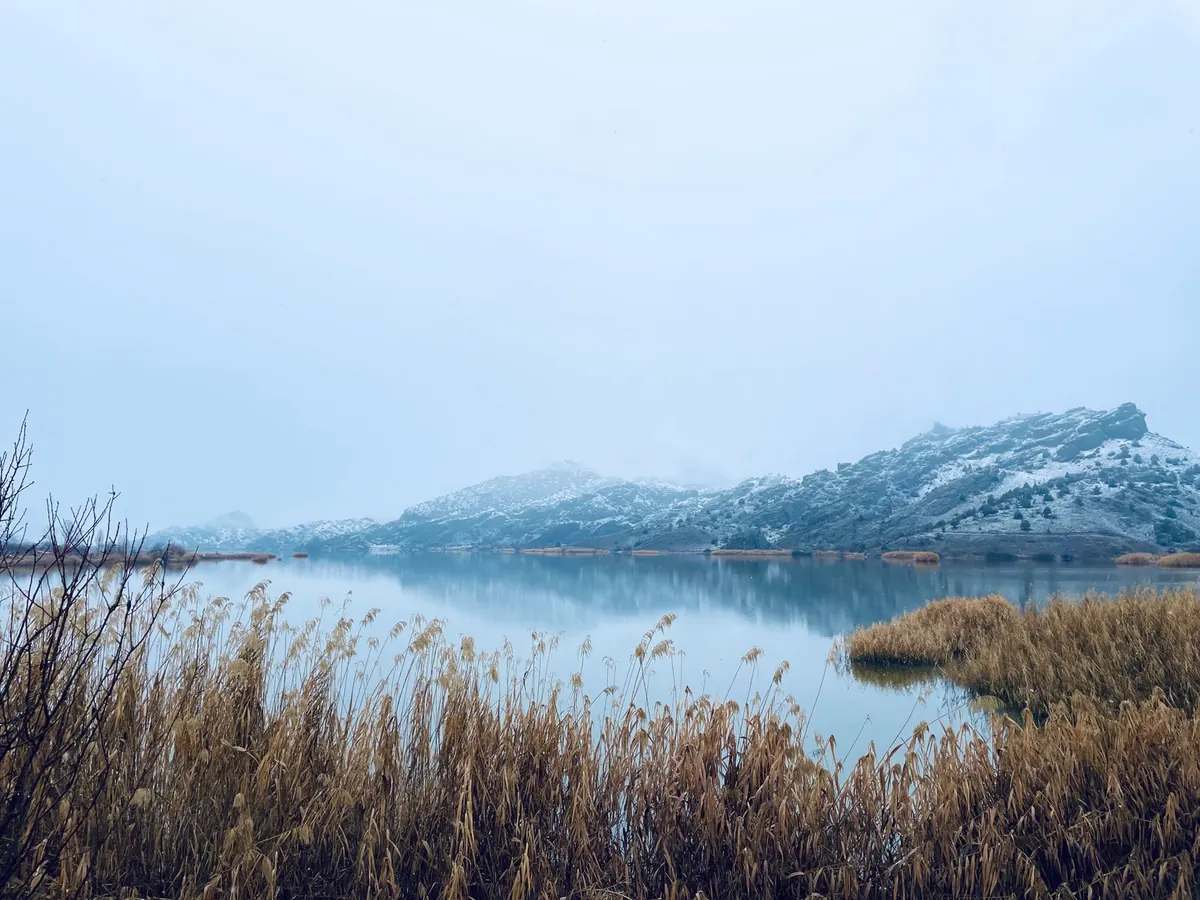
The hardest frost of the year often produces the best heron watching. As still water freezes, grey herons abandon their usual solitary habits and gather on whatever open water is left — dyke mouths, tidal creeks, the unfrozen margins of lakes — and at dusk they drift into communal roosts in the trees above. The leaves are gone, the birds are concentrated, and the reedbeds are far quieter than they are in June. Winter does much of the work for you.
How winter changes heron behaviour
Grey herons are largely resident in Britain, but cold spells bring birds across from the Continent, so numbers at favoured sites can rise noticeably after a hard snap. Feeding patterns shift first. Fish are sluggish in cold water and sit deeper, so herons move to shallow, ice-free margins and to moving water: streams, dyke outfalls, sluices, estuary channels. Once a freeze locks up the ponds, coastal sites suddenly matter more than inland lakes — estuaries, saltmarsh creeks and harbours tend to stay open except on the very coldest tides.
The second change is social. Outside the breeding season, grey herons roost communally in tall waterside trees, often alongside little egrets and, at a growing number of sites, great white egrets. A stand of pines that looks deserted at midday can hold a dozen or more birds an hour before dark.
The herons and egrets worth knowing
Grey heron
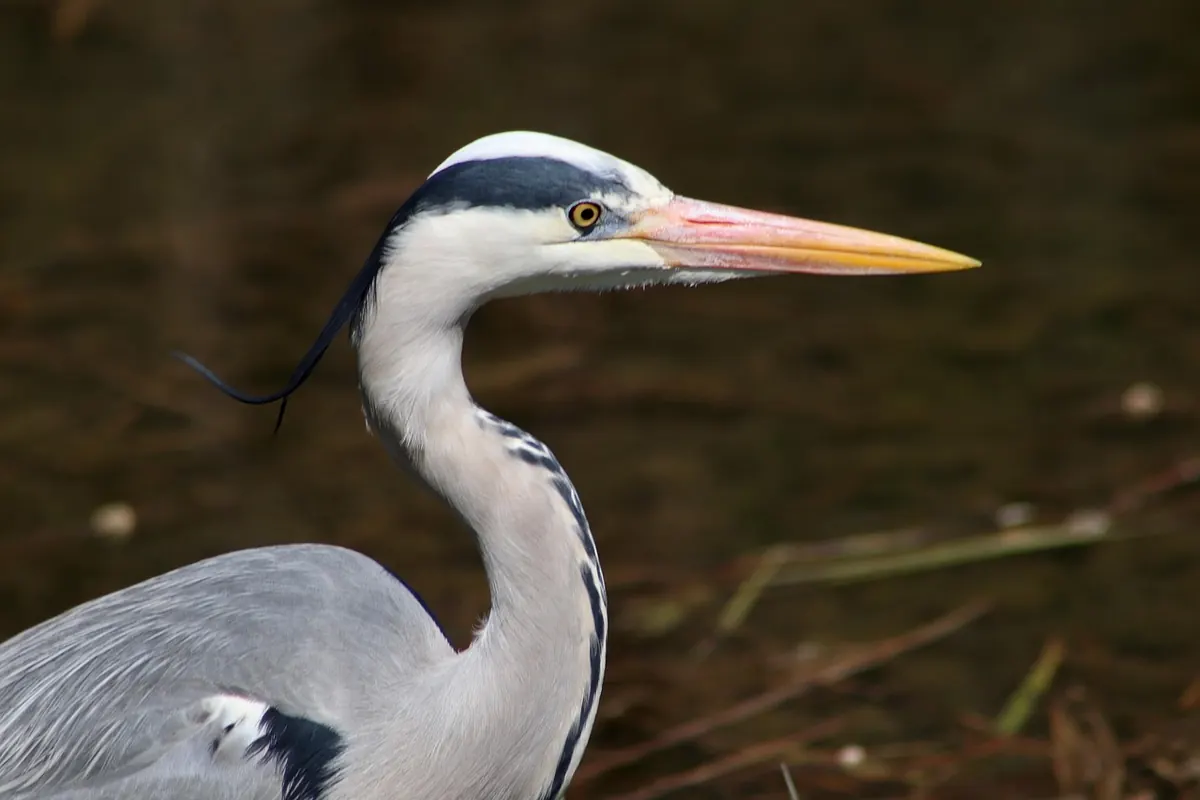
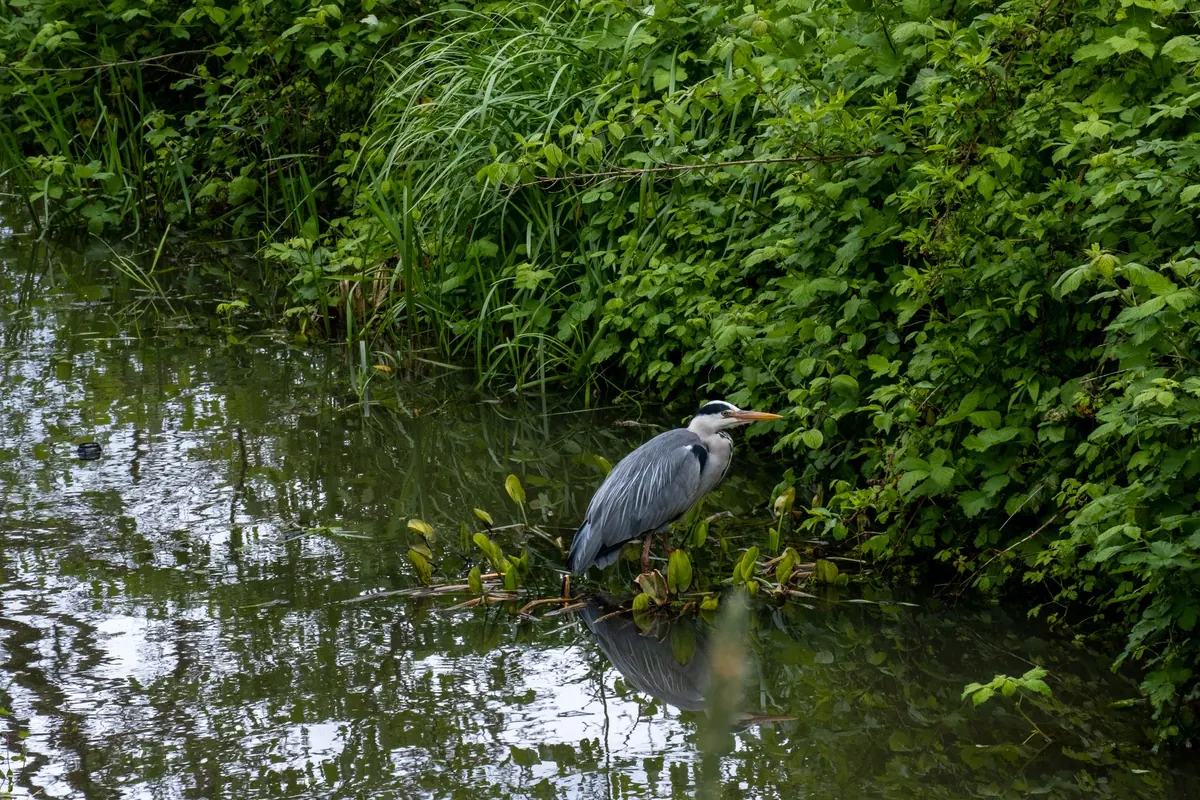
The default bird, and the one you will almost certainly see. Big, hunched, blue-grey, with a heavy dagger of a bill. In winter look for them standing motionless at ice edges, and watch for the slow, deliberate wingbeats of birds moving between feeding areas and roost.
Little egret
Small, brilliant white, black legs with startling yellow feet. Now widespread around the coast and on wet grassland, and often roosts in the same trees as grey herons. Estuary mudflats and saltmarsh creeks are reliable places to find them.
Great white egret
Considerably larger than a little egret, with a long yellow bill and a long, kinked neck. It has become an increasingly regular winter visitor, particularly in the Somerset Levels, around the Ouse Washes and at a scattering of other lowland wetlands. If a white heron looks too big and too long-necked, check the bill colour.
Bittern
The winter prize, and the reason many birdwatchers stand in the cold at dusk. Cryptic, buff-brown and almost invisible among reeds, bitterns become slightly easier when hard weather forces them to feed at the edges of frozen pools. Most sightings are of birds in flight — broad wings, slow wingbeats, a stocky, heron-like shape crossing low over the reedbed.
Cattle egrets and night herons also turn up in Britain, but they are scarce enough to be a bonus rather than something to plan around.
Wetland hotspots to try
- RSPB Minsmere, Suffolk — the classic reedbed reserve, with Bittern Hide and Island Mere giving good views over open water and reed margins. Grey herons, little egrets and bitterns all winter here.
- RSPB Ham Wall and Shapwick Heath, Somerset — extensive reedbeds and open water, with great white egrets now a regular feature and bitterns present through the winter.
- WWT Slimbridge, Gloucestershire — the Tack Piece and Rushy Hide give close views of herons and egrets on wet grassland alongside wintering wildfowl.
- RSPB Leighton Moss, Lancashire — reedbeds, pools and hides close to the reeds; a strong bittern site, and herons feed along the dykes.
- WWT Welney and the Ouse Washes — flooded washland that attracts egrets and herons when the fields hold water.
- RSPB Burton Mere Wetlands, Dee Estuary — a mix of estuary and freshwater pools, good for little egrets and herons on rising tides.
- Rutland Water, Leicestershire — reservoir edges and lagoons where grey herons and egrets feed, with roosts in the surrounding trees.
- NWT Cley Marshes, Norfolk — coastal marsh and reedbed; herons and egrets feed on the pools and marshes through the winter.
- RSPB Strumpshaw Fen, Norfolk — a quieter Broads reedbed, well worth a dusk visit for bitterns.
- WWT Caerlaverock, Dumfries and Galloway and RSPB Lochwinnoch, Renfrewshire — good Scottish options for herons, egrets and winter wetland birds.
How to find and watch a roost
Start with the trees. Look for tall, sheltered stands — pines, poplars, willows, sycamores — standing beside water or on an island. Whitewash on trunks and on the ground beneath is the giveaway, along with the scattered pellets and droppings that build up under a long-used roost.
Then pick your hour. Herons leave the roost at first light and trickle back in the last hour before dark, usually flying in low and rising steeply into the canopy. A field or bank a safe distance away, with binoculars and a little patience, is all you need to count them. Numbers can vary enormously from night to night, so a roost that holds three birds one evening may hold fifteen the next.
Timing, kit and technique
- Go at the edges of the day. The first and last hour of light are when herons move; middle-of-the-day visits are for scanning, not counting.
- Choose a cold, still, bright day after frost. Hard weather concentrates birds on the few patches of open water.
- Scan ice edges, dyke mouths and sluice outfalls, not just the middle of the lake.
- Take binoculars and, if you have one, a scope for reading distant reed edges and far shorelines.
- Wear quiet, warm layers and something windproof. Standing still for an hour in January is much colder than walking for an hour.
- Use the hides. They cut disturbance and keep you comfortable while birds settle in front of you.
- Give roosts room at dusk. Watch from the path or hide, and never walk into the trees to get closer.
Watching without disturbing
Winter is a lean time for herons, and the birds need their energy for feeding rather than for flying away from people. Keep to paths and hides, resist the urge to creep along the reed edge for a better view, and avoid using recordings or playback to bring birds closer — it is unhelpful at any time of year and particularly stressful in cold weather. If a bird lifts its head and stares at you, you are already too close.
Planning your winter heron trip
Pick a reserve that offers a mix of reedbed, open water and wet grassland; that combination gives you somewhere to look whatever the weather does. Check opening times and hide access before travelling, since some sites run shorter winter hours and not every hide stays open. Take a flask, a spare pair of gloves and a notebook for roost counts — recording what you see on a few visits will teach you more about local heron movements than any single trip.
And if the first visit produces nothing but a grey heron and a cold nose, go back. Winter weather moves birds around constantly, and a site that seems empty one week can be full of them the next.
Photo: Arsel Ozgurdal / Pexels