Heron Spotting in London: Best Parks and Canals for Beginners
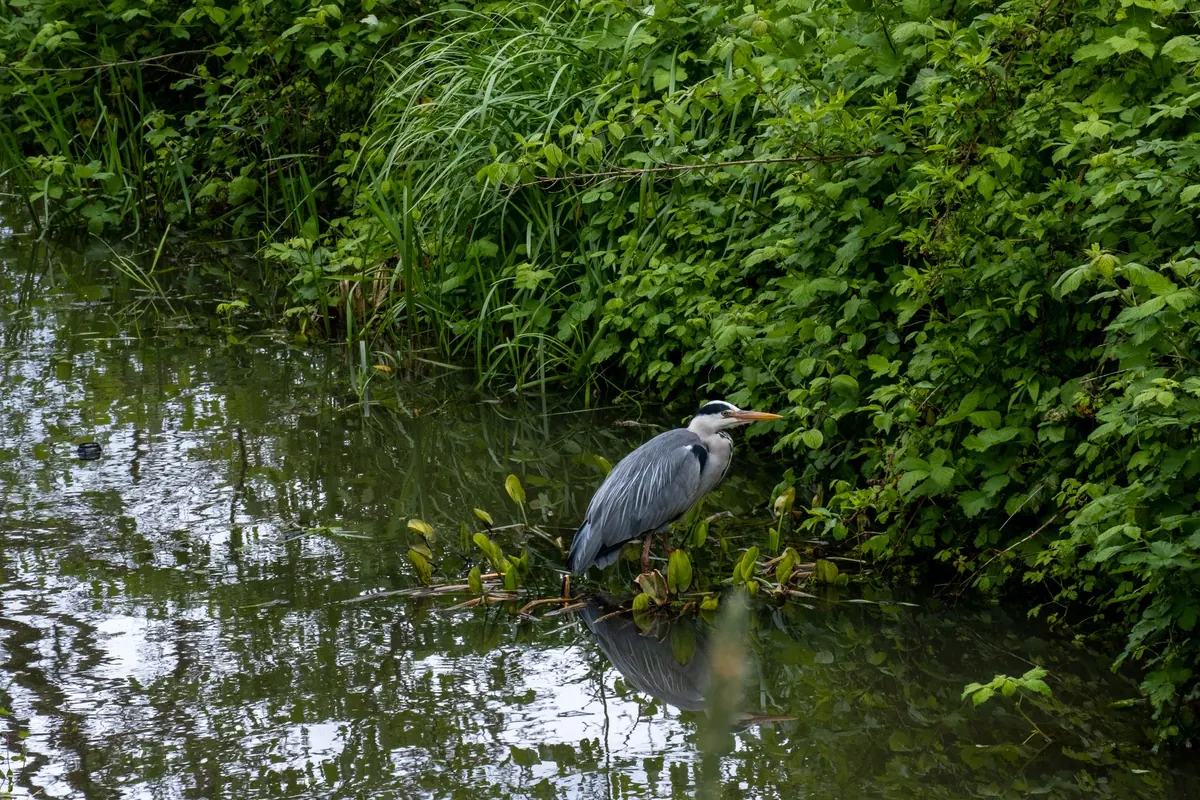
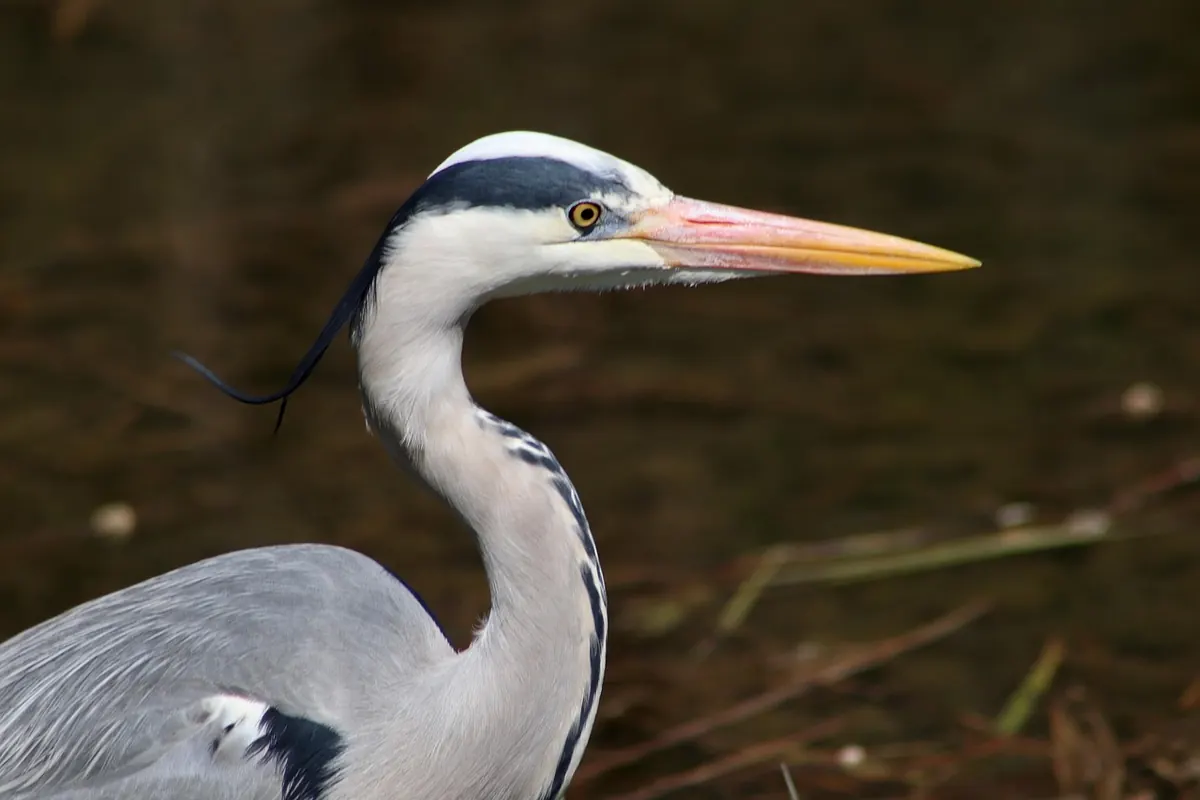
Grey herons are the most reliable large bird in London. You do not need a car, a permit, a hide or a six-hour drive. A park pond, a stretch of towpath and twenty quiet minutes will usually do it. What makes them so good for beginners is their patience: a heron will stand motionless in the shallows while pedestrians, joggers and pushchairs pass a few metres away. That tolerance is your advantage. Here is where to go, when to go, and what the bird is actually doing while it stares at the water.
Why London Suits Herons
Herons need shallow water with fish, somewhere quiet to nest and a tolerance for people. The capital accidentally provides all three in quantity. Ornamental lakes in the royal parks hold carp, roach and perch. The canal network threads through the city like a slow-moving larder. The tidal Thames, at low water, exposes miles of mud and shallow channel where fish and eels are concentrated and easy to pick off.
The birds themselves have adapted. Urban herons tend to be far less flighty than their country cousins, which means beginners get the close, unhurried views that build confidence in identification and observation. If you can watch a bird properly, you learn far more than you do from a fleeting glimpse through binoculars.
Parks Worth Starting With
Regent's Park
The lake and its island are the classic London heronry. Birds nest colonially in the tall trees, and outside the breeding season you will often find one or two hunched on the bank near the boating area, entirely unbothered by the ice-cream queue. Walk the perimeter path slowly and scan the far edges of the water rather than the middle.
Hyde Park and Kensington Gardens
The Serpentine and the Long Water give you long sightlines, which is helpful when you are learning. Herons favour the quieter stretches and the vegetated margins. Early morning here is genuinely good: fewer people, more bird activity, and light coming across the water from the east.
St James's Park
Small, central and easy to walk in an hour. The south bank and the area around Duck Island are the most productive spots. This is a good place to practise the key skill of spotting a grey, angular shape against grey water.
Battersea Park and Hampstead Heath
Battersea's pond, near the Peace Pagoda, has hosted a long-standing heronry. On the Heath, the Highgate Ponds offer a more wooded, enclosed feel — good for watching birds fly in and out of the roost at dusk.
Also worth the trip
- Kew Gardens — herons around the lake, with quieter corners than the central parks. Entry is charged.
- Walthamstow Wetlands — a large reservoir reserve in the Lee Valley, free to enter, with excellent waterbird watching.
- London Wetland Centre, Barnes — purpose-built hides and ponds; admission is charged.
- Alexandra Park and Dulwich Park — smaller, local options if you want to stay near home.
Canals, Towpaths and the Tidal Thames
The Regent's Canal, the Grand Union and the Lee Navigation all reward slow walking. Herons here tend to stand on the far bank, on moored boats, or on the low brick edges just above the waterline. Look ahead of you, not just beside you — a grey shape fifty metres down the towpath is often a heron before it is anything else.
The Thames is a different experience. On a falling tide, walk the embankment paths at Rotherhithe, Wapping, Putney or Barnes and watch the exposed foreshore. Herons work the shallow channel edges, often alongside cormorants and gulls. Check tide times before you go, since the window around low water is limited. Never walk out onto mud: it is soft, and some foreshore areas have restricted access, so stay on the path and use binoculars instead.
Best Times of Day and Year
The first two hours after dawn and the last two before dusk are consistently the most productive. Herons feed most actively in low light, when fish move into shallows and small fish are easier to catch. Middle-of-the-day visits are not wasted — a heron will still stand and fish — but you will see less movement.
Season by season:
- Winter: leafless trees reveal roosts and nesting platforms. Look for several birds gathered in one tree.
- Late winter to spring: nesting activity from roughly February into May. Adult birds fly back and forth with sticks, and the heronry becomes noisy.
- Summer: adults and young birds spread out along rivers and canals. Watch for the wing-spreading feeding technique described below.
- Autumn: birds return to favoured ponds and roosts; a good time to learn your local sites properly.
What You Are Actually Watching
Most of what a heron does is fishing, and it does it slowly. Learn these behaviours and a static bird becomes a drama.
- The freeze. The bird stops mid-step, neck coiled, and holds. It is not posing; it is waiting for prey to forget it is there.
- The strike. A sudden, fast lunge into the water. The bird then repositions the fish and swallows it head-first.
- Canopy feeding. In bright sun, a heron may partly open its wings over the water, casting a shadow that brings fish into view.
- Flight. Slow, heavy wingbeats with the neck retracted into a compact S shape. This tells you instantly that it is a heron and not an egret or cormorant.
- Squabbles. Bill-snapping, raised crests and short chases when two birds want the same stretch of bank.
Telling them apart from the lookalikes
The little egret is now a common London bird: brilliant white, with a black bill and yellow feet. Cormorants sit lower in the water and dive, rather than standing. If something looks almost but not quite like a grey heron and seems too white, check it properly rather than assuming.
Kit, Etiquette and a Few Ground Rules
- A pair of 8x42 binoculars is plenty. A telescope is only needed for the far side of a large reservoir.
- Wear dull colours and move slowly. Sudden movement flushes birds faster than noise does.
- Stand still for ten minutes in one spot. Herons often walk towards a patient observer.
- Do not feed them. Bread and scraps cause problems for both the birds and the water.
- Keep your distance from heronries in spring, and keep dogs on leads near water edges.
- Note what you see, where and when. A simple notebook — or a recording app such as BirdTrack — turns a pleasant walk into real knowledge of your local patch.
Your First Trip, Planned Simply
Pick a park with an island or a lake edge, ideally Regent's Park, St James's Park or your nearest canal. Arrive within an hour of sunrise, or in the final two hours of daylight. Walk the perimeter slowly, scanning the shallow margins and the far bank rather than the open water. Pause for ten minutes at each promising spot. If nothing shows, move a hundred metres and repeat.
You will not see a heron every time. You will see one most times, and once you have found two or three reliable local spots, you will start noticing them on streets you walk every week. That is the real reward of starting with an easy, common bird: it teaches you how to look. Take care on towpaths and embankments, check tide times before using the Thames, and stay on firm ground.
Photo: Joost van Os / Pexels