Grey Heron Identification: A Beginner's Guide to UK Herons and Egrets
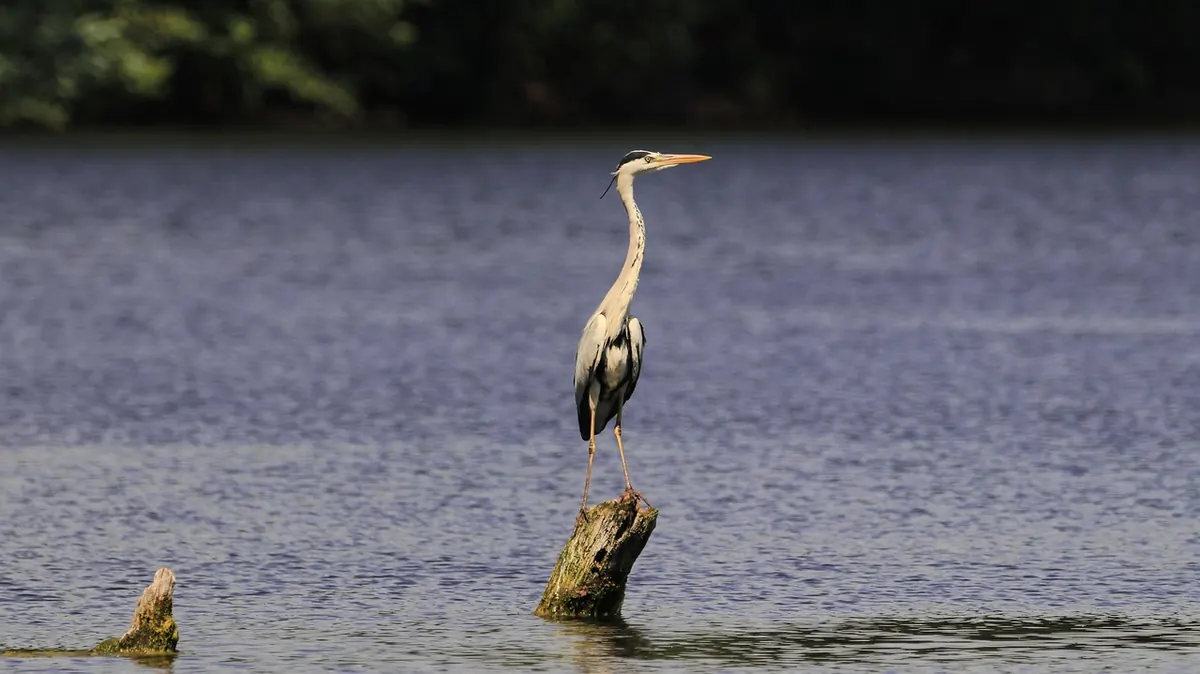
Few birds are as easy to notice and as easy to misidentify as the grey heron. It is the tall, patient figure at the edge of a pond, the slow shape flapping over a motorway at dusk, the visitor that empties a garden pond and then stands there looking innocent. Most of the time it really is a grey heron. Occasionally it is something better — a little egret, a great white egret, or a bittern hiding in the reeds. A handful of details will let you tell them apart, even at distance.
Size and shape first, colour second
Birders often rush to plumage. Start with bulk instead, because at 100 metres a white bird with a long neck is not much to go on.
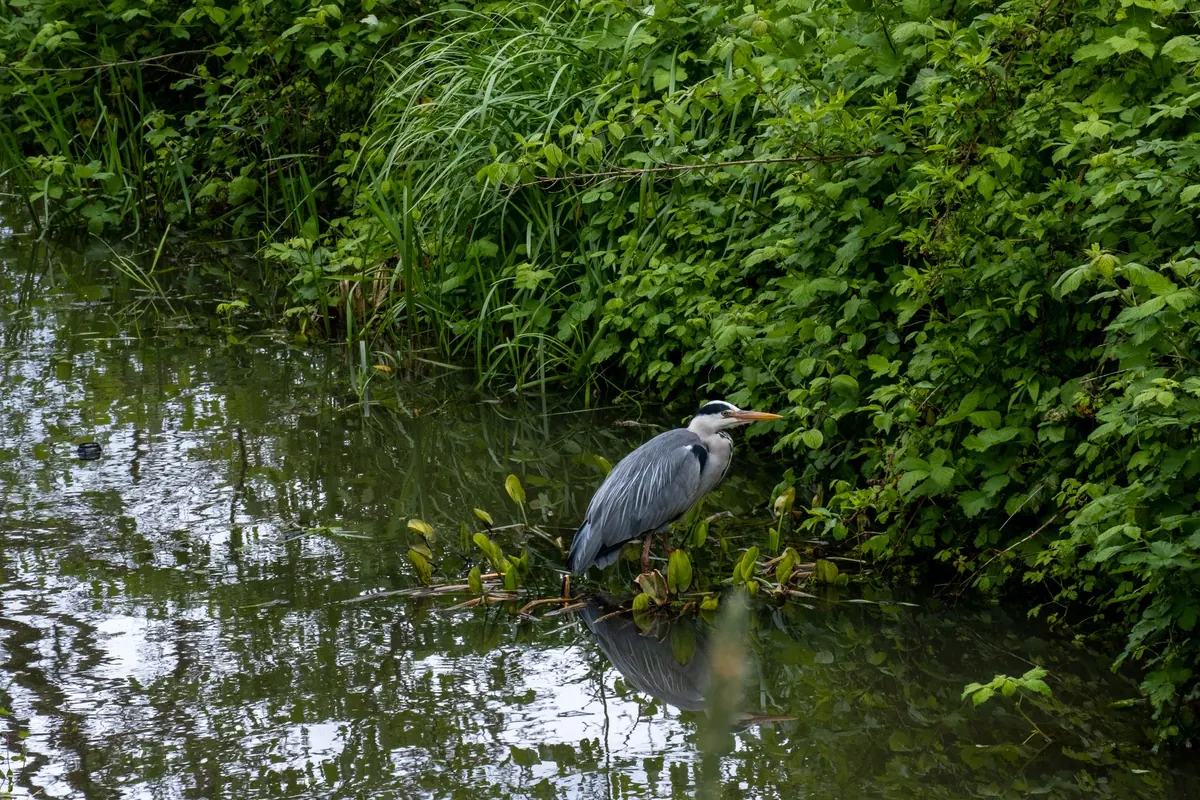
A grey heron stands roughly a metre tall — about the height of a kitchen worktop — with long legs, a long neck and a heavy, dagger-like bill. A little egret is far smaller, nearer the size of a mallard but taller and sleeker. A great white egret is almost as tall as a grey heron, though slimmer and more elegant. A cattle egret is small and dumpy, with a short neck and a habit of looking hunched.
Use something fixed for scale: a fence post, a gate, a grazing cow, a car. A long-legged bird in a field with no reference point can look enormous, and size is the first thing you get wrong when a bird is close.
The grey heron's field marks
An adult grey heron in good light is hard to confuse if you check these:
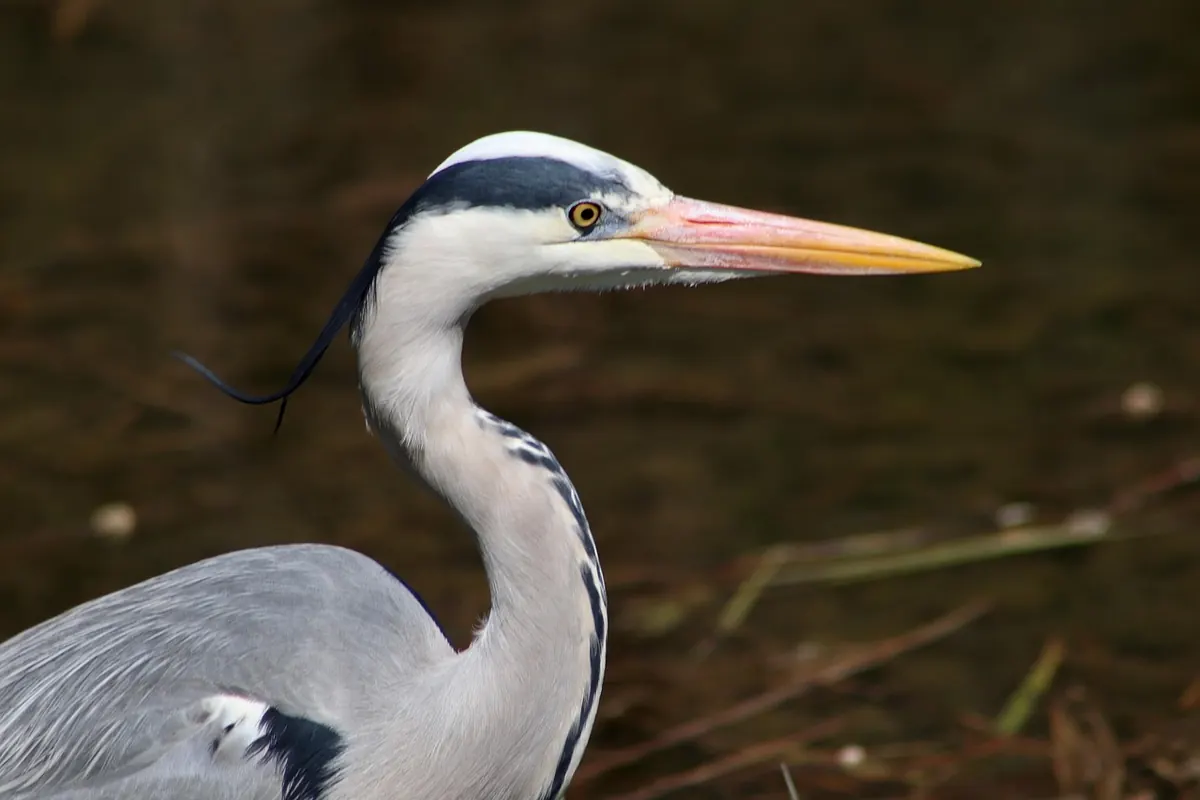
- Plumage: soft grey wings and back, with darker flight feathers and a paler, streaked neck and breast.
- Head: white, with a bold black stripe running from above the eye into two long, trailing black plumes.
- Bill: long, straight, dagger-shaped, yellow to orange-yellow, brightest in spring.
- Legs: long and dull yellow to brownish, with big, splayed toes.
- Posture: the neck is normally folded back into a hunched S, which gives the bird a shoulders-and-no-neck outline.
Young grey herons are scruffier than adults: the crown is grey-brown rather than white and the black stripe is vague, so the head looks muddy. They usually lack the long nape plumes. If you are unsure, watch the bird for a few minutes — the stocky shape and heavy flight give it away.
Telling the white ones apart
Little egret
Pure white, with a black bill and black legs ending in bright yellow feet. Those feet are the giveaway, although they are often hidden in mud or weed. In spring, adults grow two long, fine plumes from the nape and shaggy plumes on the breast and back. Little egrets are restless feeders, dashing and shuffling, and they often feed in shallow water or on wet grass beside rivers and estuaries.
Great white egret
Almost grey heron height, all white, with a long yellow dagger bill and black legs and feet. The neck is longer and thinner than a grey heron's and is frequently held in a kink. A white heron-sized bird with a yellow bill is a great white; a white heron-sized bird with a black bill would be a little egret seen at a misleading distance, or a spoonbill if the bill is long and flattened like a spatula.
Cattle egret
Small, compact and short-necked, with a yellow bill and dark legs. In breeding plumage it shows buff patches on the crown, breast and back. It often feeds on dry land — playing fields, horse paddocks, pasture with livestock, and road verges — which is a useful clue, as the others prefer water.
Bittern
A brown, heavily streaked relative rather than a white one, and a reedbed specialist. If you flush one it looks like a sturdy, broad-winged brown heron lumbering away low over the reeds. Most people hear bitterns long before they see one.
Flight: the detail that settles most arguments
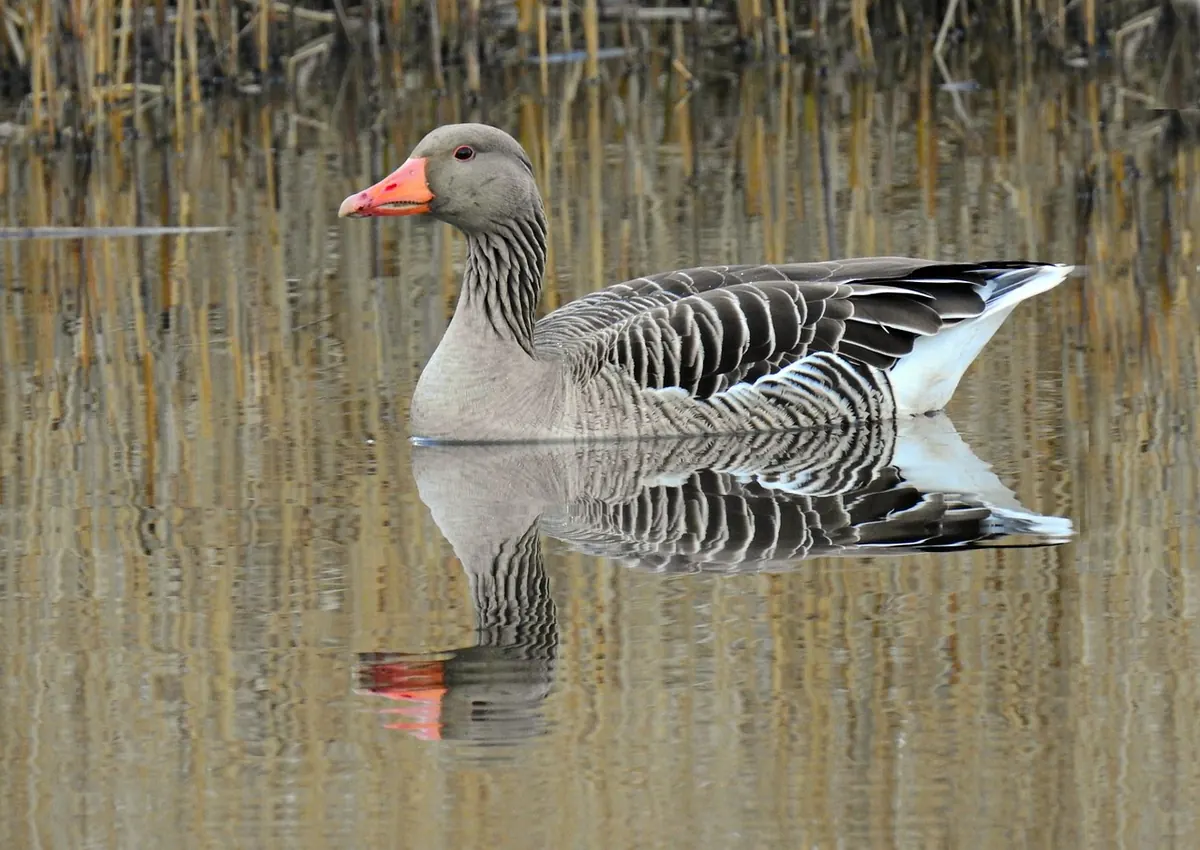
Herons and egrets fly with the neck folded back, head pulled in tight to the shoulders, and long legs trailing well beyond the tail. That compact, slightly hunchbacked silhouette is your confirmation. Cormorants, which are also dark and often fly low over water, stretch the neck out in front and look long-tailed. Cranes fly with the neck extended and legs trailing — but they are rare, and much larger. Ducks and geese fly with the neck out too.
Wingbeats help as well. Grey herons and great white egrets flap slowly and deliberately, as if it costs them something. Little egrets beat faster and more urgently, and often look flappy and slightly frantic.
Calls, posture and behaviour
A grey heron's voice is a harsh, carrying croak — often written as fraaank — usually heard as the bird flies off or circles overhead. At a heronry in spring, a tree full of them makes a proper racket of croaks and bill-clattering. Little egrets give a rasping, gravelly croak, sometimes in a short series. Great white egrets sound lower and more muffled. Cattle egrets produce soft, rolling chuckles. The bittern's spring boom is a deep, far-carrying sound from deep in a reedbed, easier to hear than to describe.
Behaviour separates them too. A grey heron will stand motionless for minutes, then strike with a fast, straight thrust of the neck. Little egrets shuffle their feet to flush prey, dash about, and spread their wings to herd fish. Great white egrets often stir the water with the bill. Cattle egrets walk behind cattle or tractors, snapping up what the bigger animal disturbs.
One practical note if you keep fish: a grey heron can clear a small pond. Netting, a raised edge, or a pond that shelves steeply at the sides will reduce the losses. Take it as a compliment.
Getting your eye in: a simple practice routine
- Choose a local patch — a park lake, canal, gravel pit or estuary — and visit at roughly the same time each week.
- Watch a bird for several minutes before deciding what it is. Note its size against something fixed, its bill colour, its leg and foot colour, and how it holds its neck.
- Name it with two reasons, not one: for example, grey body plus the black eye-stripe for a heron; white body plus black bill plus yellow feet for a little egret.
- If it flies, follow it and check the neck and legs. Folded neck and trailing feet mean heron family.
- Keep a small notebook. A rough sketch of the outline teaches you more than a written note ever will.
Finally, be a quiet observer. Keep well back from heronries and nesting trees in spring, use binoculars or a scope rather than walking closer, and never push through reeds towards a bittern. The birds will reward your patience; the next grey or white shape over the water will be a quick decision rather than a guess.
Photo: wzdigiphoto / Pixabay